- There is an opportunity to improve patient awareness of BsAbsa and CAR T-cell therapies1
When asked about approved immunotherapies
- Up to 42% of patients had never heard of BsAbs1,a
- Up to 33% had never heard of CAR T-cell therapies1
- Patient awareness was highest in the US and lowest in the EU and Japan1,b
Click here for the impact of
Patient Characteristics and Socioeconomic Factors on therapy awareness
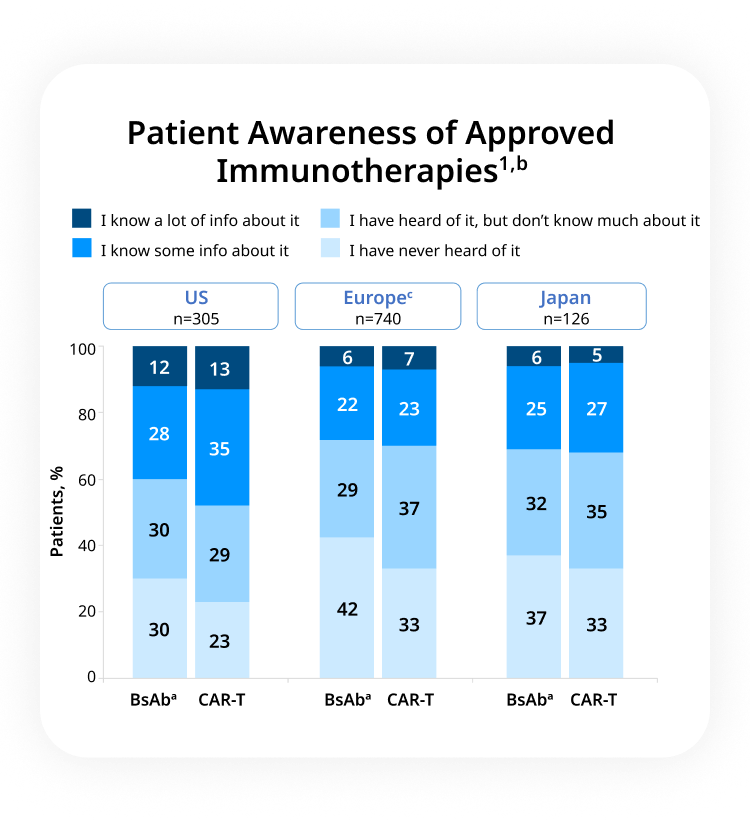
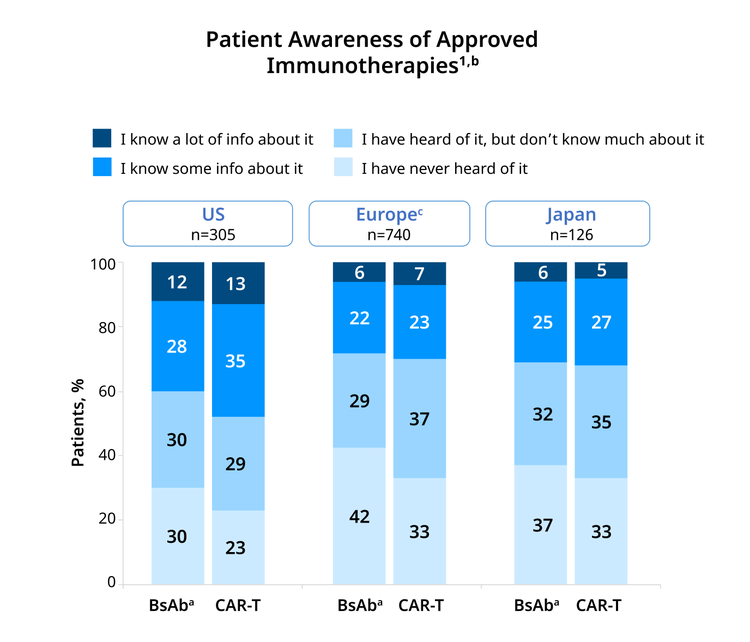
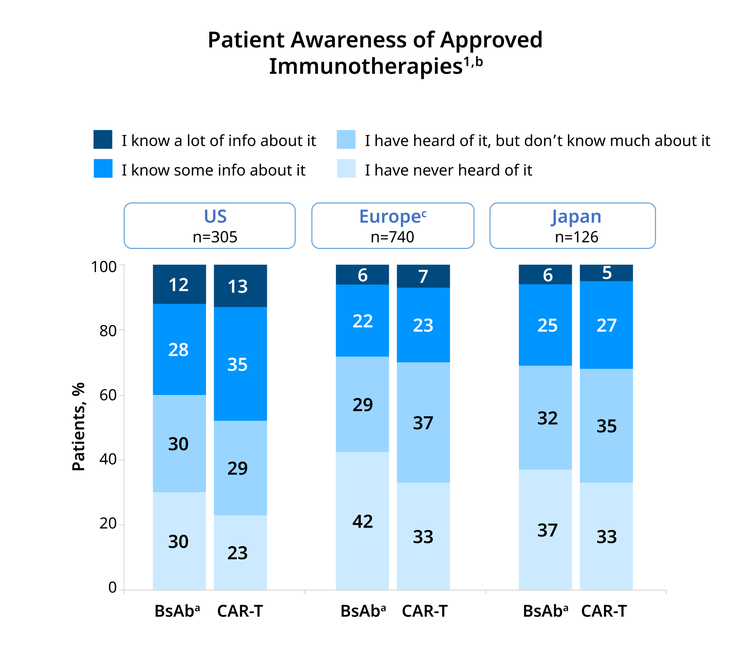
BsAb, bispecific antibody; CAR, chimeric antigen receptor; CAR-T, chimeric antigen receptor T-cell therapies.
Click here for the impact of
Patient Characteristics and Socioeconomic Factors on therapy awareness
Patients Who Recalled Physicians Offering BsAbs or CAR T-Cell Therapies1,2,a

Click here to see how patient and treatment factors impact being offered BsAb or CAR T-cell therapy
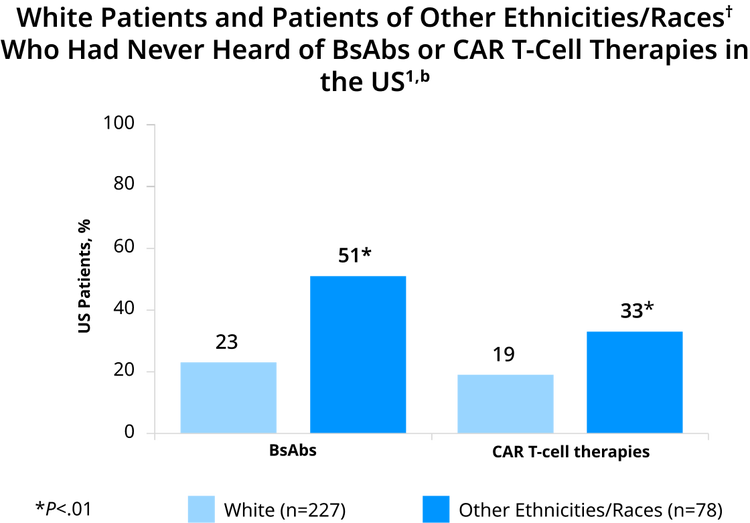
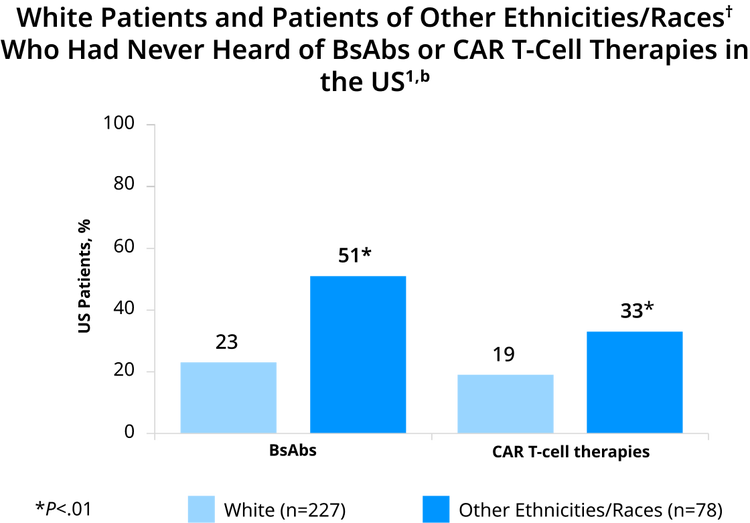
†Asian or Pacific Islander, Black or African American, Hispanic or Latino, Native American or other indigenous community, or other.
- Few patients recalled physicians offering BsAbs or CAR T-cell therapies1,a
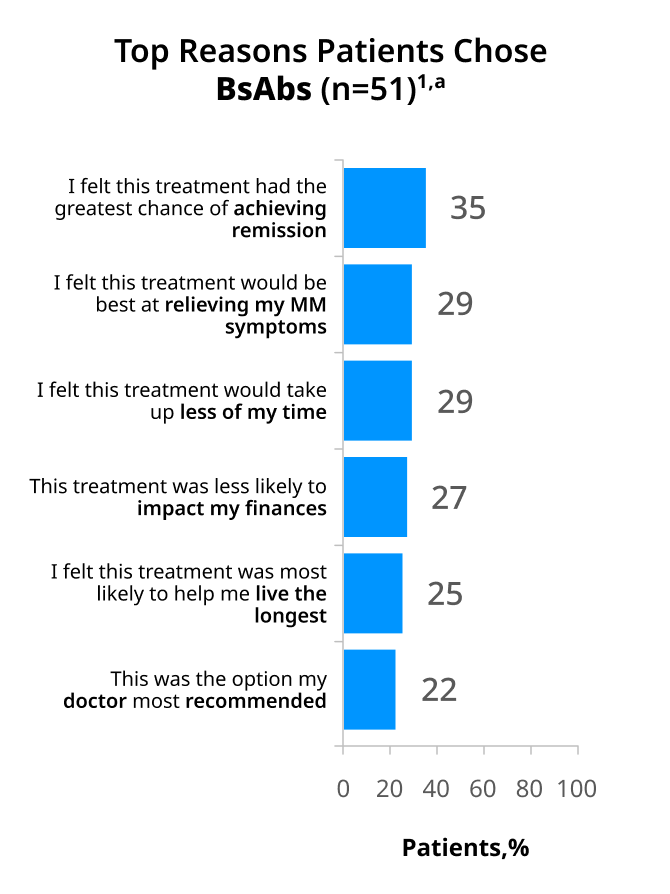
Efficacy was the most important consideration for patients who chose BsAbs or CAR T-cell therapies1
- Of patients who were offered BsAbs, 57% (n=51) chose to receive treatment1,2
- Convenience and physician recommendation were also among top reasons patients chose BsAbs1
- Of patients who were offered CAR T-cell therapies, 76% (n=103) received treatment1,2
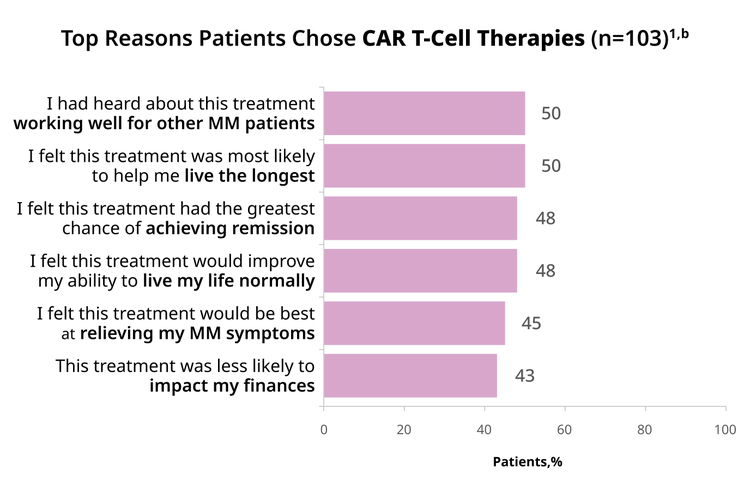
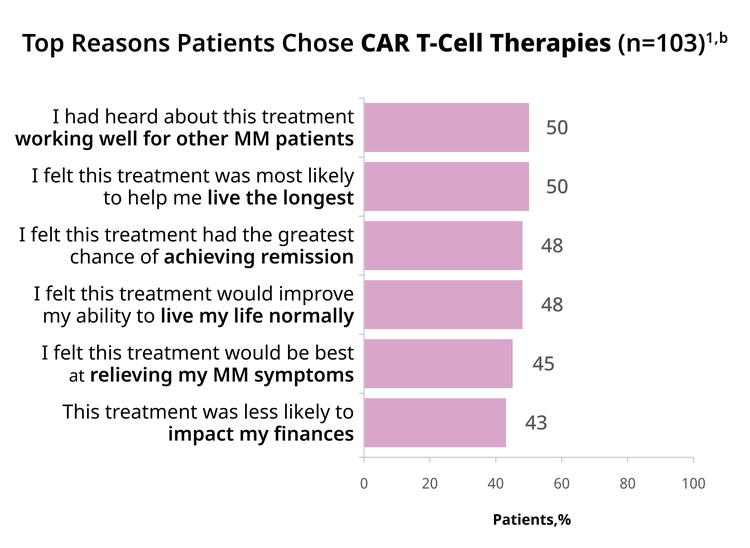
- Learning that CAR T-cell therapies worked well for others was one of the top reasons for choosing the therapies, suggesting demand for CAR T-cell therapies may be influenced by other patients’ experiences1
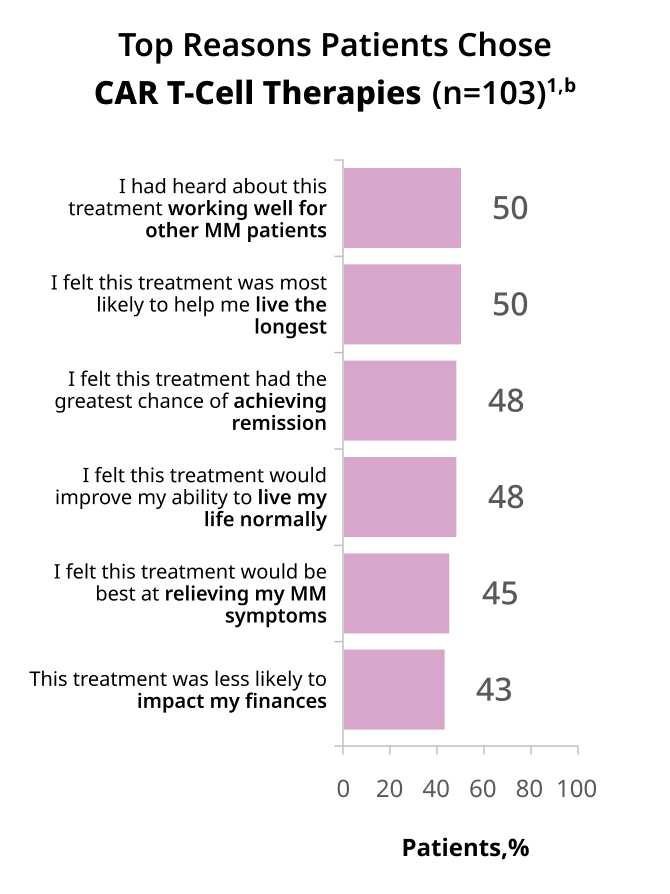
aSurvey respondents could select up to 5 responses from a choice of 15.3 bSurvey respondents could select up to 5 responses from a choice of 13.3
The top reason patients declined BsAbs or CAR T-cell therapy was due to feeling overwhelmed1
Reasons for patients declining treatment as reported by HCPs were generally similar between the 2 therapies, yet1:
- Uncertainty around treatment efficacy was one the top reasons for declining BsAbs but not CAR T-cell therapies
- Short-term safety concerns were among the top reasons for declining CAR T-cell therapies but not BsAbs
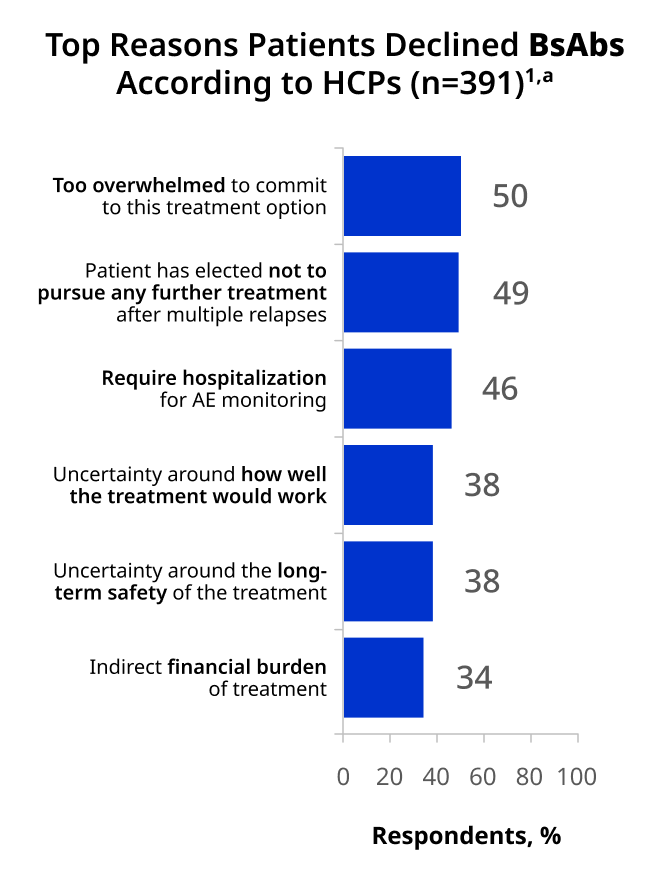
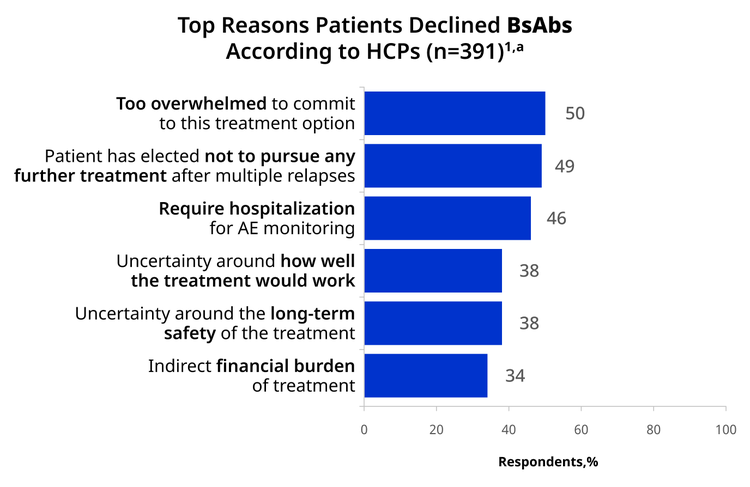
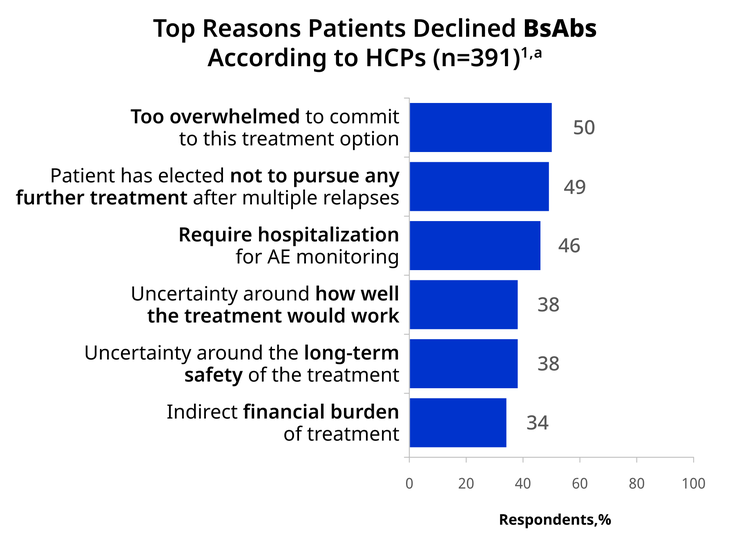
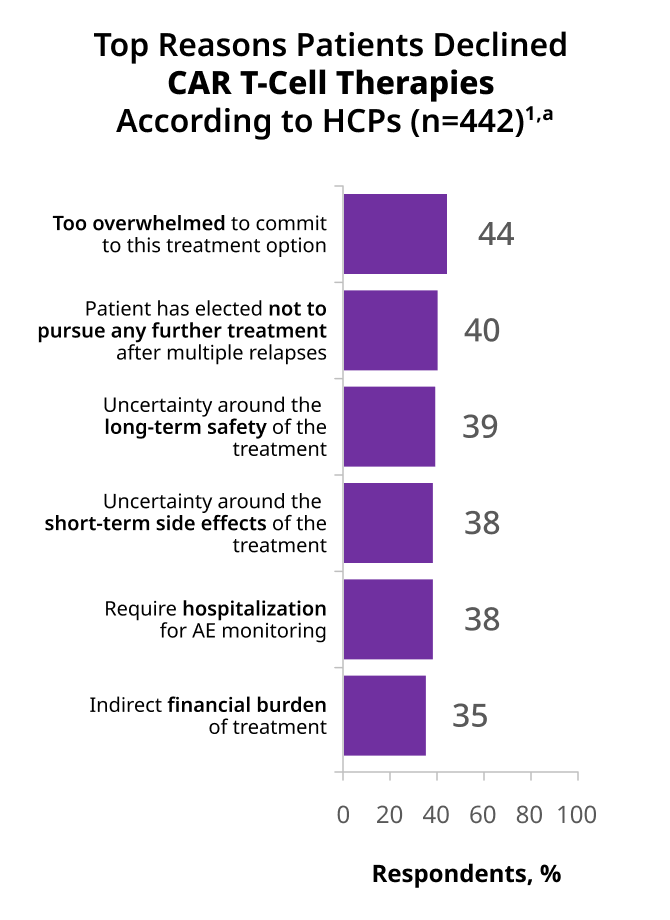
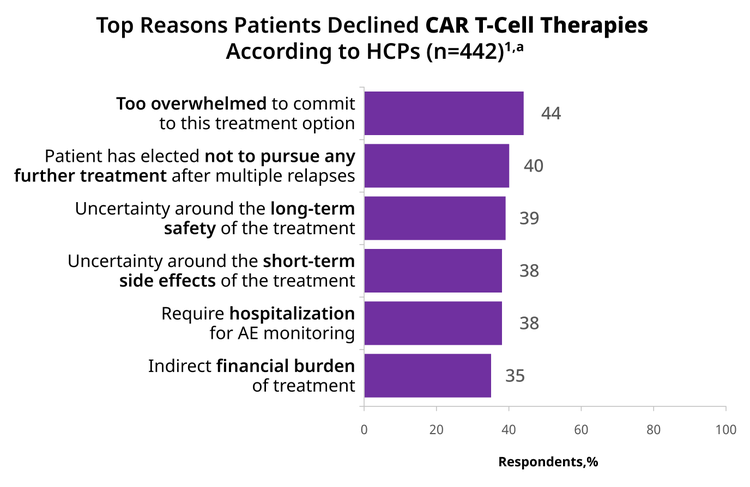
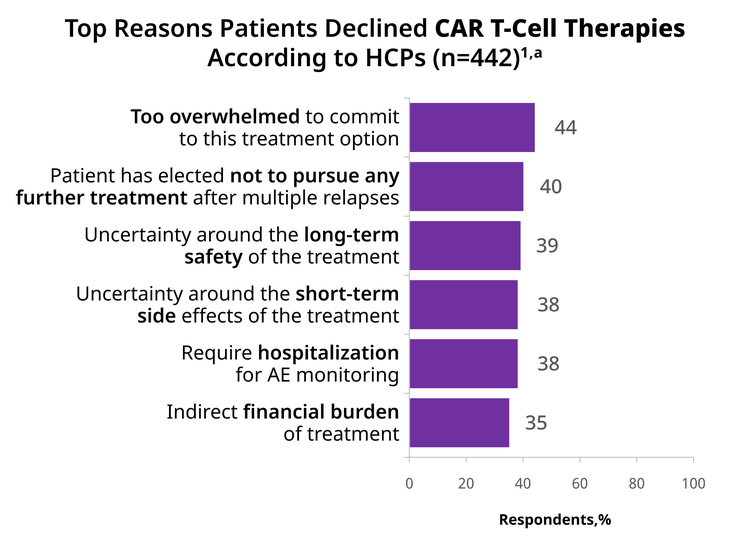
tIn the survey sample, 11 patients each declined BsAbs or CAR T-cell therapies. Due to this small number of patients, patient data on their reasons for declining therapies were not included. HCPs were asked to choose the top 5 reasons their patients declined each type of therapy from a selection of 15.1,4
AE, adverse event.
Improve Patient Familiarity with Approved Immunotherapies
Partner with patient advocacy groups to increase awareness of BsAbs and CAR T-cell therapies, particularly among patients in underserved populations
Who Can Take Action?
HCPs, patients, patient advocacy groups, industry
Rationale
The limited awareness among patients with RRMM (up to 42% of patients had never heard of BsAbs, and up to 33% had never heard of CAR T-cell therapies) indicates a need for broad patient education.1 Awareness was lowest in the EU and Japan, and among patients of ethnicities/races other than Whitea in the US, suggesting educational efforts may be particularly needed for these groups.1 Patient advocacy groups and other organizations can be important sources of patient information and improve awareness through educational outreach, helping to ensure patients are fully informed when making treatment decisions.5 In addition, survey results suggest that including platforms for patient-to-patient communication may be particularly impactful.1
aAsian or Pacific Islander, Black or African American, Hispanic or Latino, Native American or other indigenous community, or other.
Support creation and distribution of information to make patients and care partners more comfortable receiving these types of immunotherapies
Who Can Take Action?
Clinical experts, HCPs, patient advocacy groups
Rationale
For both BsAbs and CAR T-cell therapies, feeling overwhelmed was the top reason patients declined treatment.1 Providing practical advice through multiple methods of communication (verbal, written, and video content, patient mentors, etc) may help reduce complexity for patients.
References
- Ailawadhi S, Biru Y, Clavreul S, et al. Perspectives of healthcare providers and patients with relapsed/refractory multiple myeloma on treatment priorities and novel therapies. Patient Prefer Adherence. 2025;19:1089-1104. Published April 2, 2025. Taylor & Francis Ltd. Reprinted by permission of the publisher Informa UK Limited trading as Taylor & Francis Ltd, http://www.tandfonline.com.
- Data on file. Pfizer Inc., New York, NY.
- Data on file. Pfizer Inc., New York, NY.
- Data on file. Pfizer Inc., New York, NY.
- Lu R, Tariman JD, Catamero D, Hillengass M, Noonan K. Diversity, equity, and inclusion in multiple myeloma: a call to action. J Adv Pract Oncol. 2024:1-14.