- Patients tended to consider more side effects to be “extremely challenging” to manage, including those not typically managed by hematologists/oncologists1,2
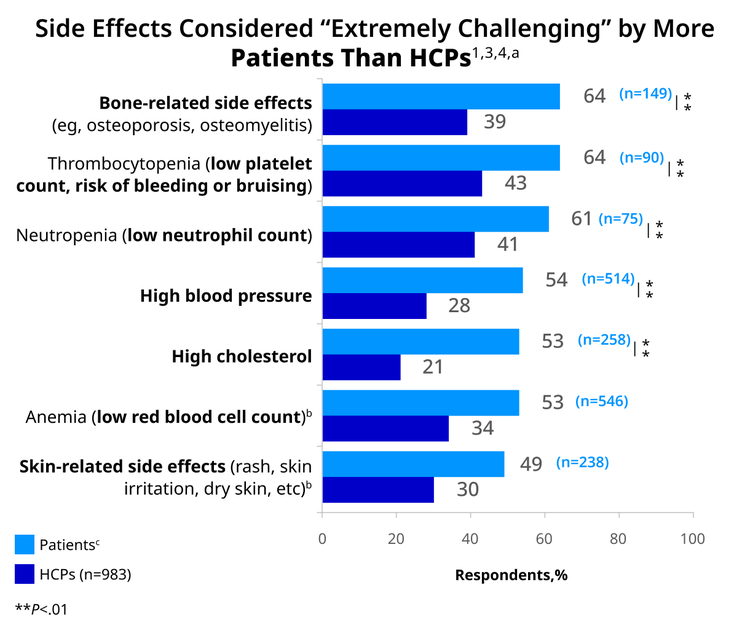
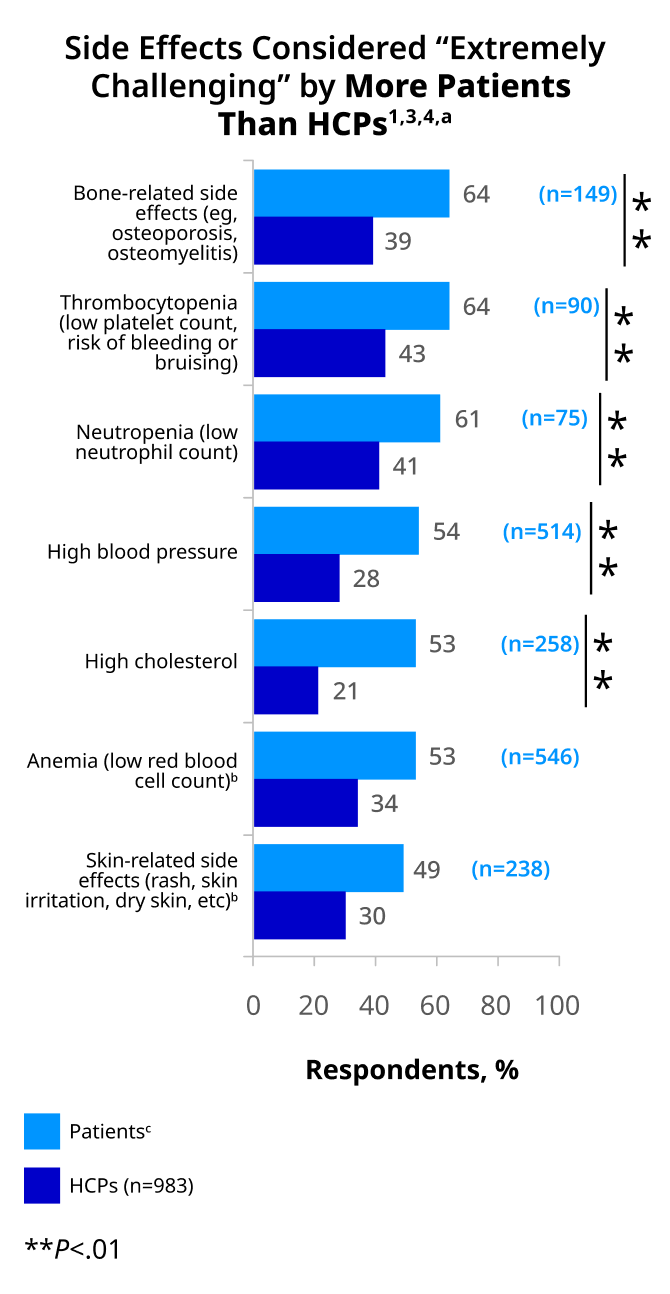
- Survey findings suggest a gap in managing side effects that are potentially addressed by non-hematologists/oncologists1,2
- The side effects HCPs considered “extremely challenging” were those associated with approved immunotherapies (eg, CRS and ICANS)1,5,6,d,e
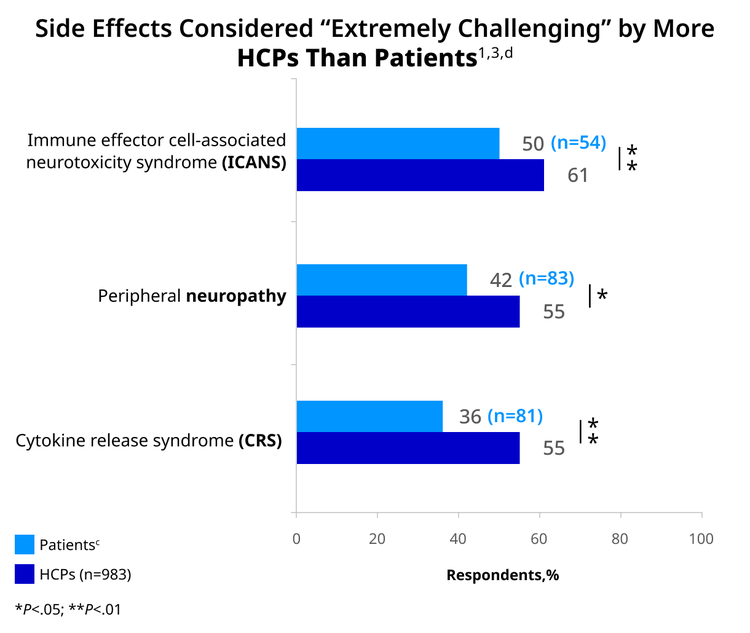
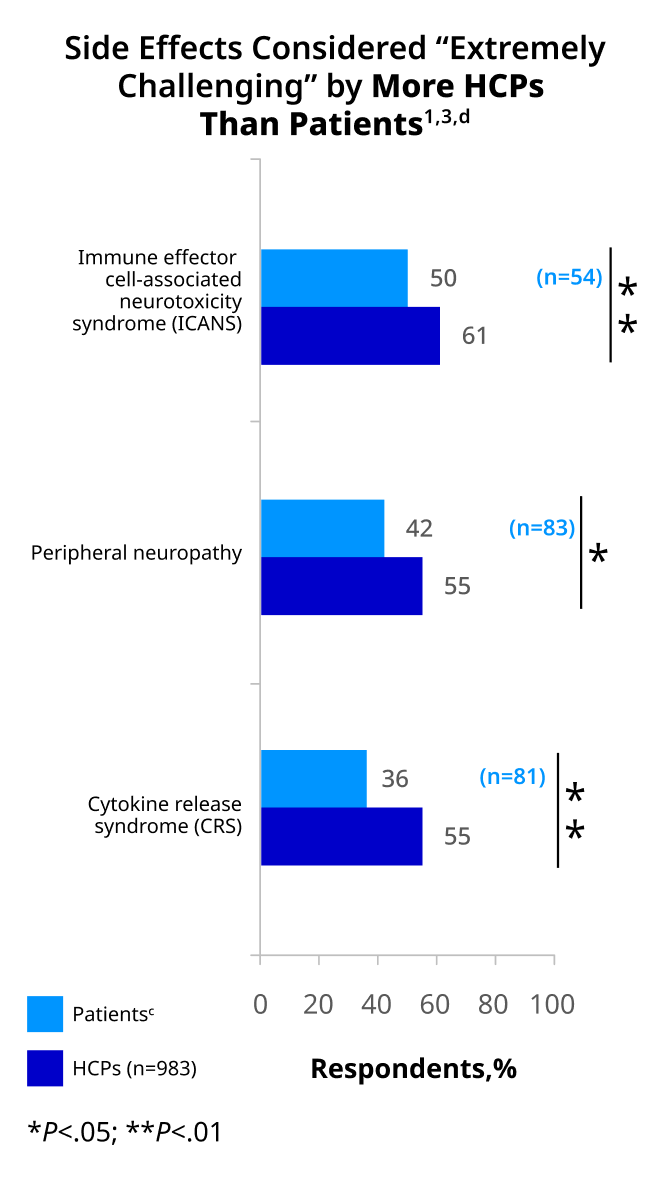
- HCPs may be less familiar with managing the side effects associated with approved immunotherapies (eg, BsAbs and CAR T-cell therapy)1,5,7,8
aGraph shows side effects considered “extremely challenging” by at least 10% more patients than HCPs. bP value was not reported. cOnly patients who had experienced a specific side effect were asked how challenging it is to manage. dIncludes side effects considered “extremely challenging” by at least 10% more HCPs than patients. eSide effects considered “extremely challenging” by both HCPs and patients included leukemia and serious infections (data not shown).1
BsAb, bispecific antibody; CAR, chimeric antigen receptor; CRS, cytokine release syndrome; HCP, health care professional; ICANS, immune effector cell–associated neurotoxicity syndrome.
Reduce Treatment Burden by Using a Comprehensive Approach to Manage Side Effects
Support a proactive approach to patient and care partner education to help manage side effects
Who Can Take Action?
HCPs, patients, care partners
Rationale
Patients and care partners may not be fully aware of actions they can take to prevent or lessen the impact of side effects. Providing education on practical matters ranging from fall prevention measures and safe exercises to use of moisturizers can help to reduce the risk of certain side effects and empower patients to take control of their health.9-11 Additionally, educating patients to notify their care team members of health events as they occur may also help to manage side effects more effectively.12
Support HCP education and coordination of care for optimal management of side effects
Who Can Take Action?
Clinical experts, HCPs
Rationale
The survey findings indicate patients may need additional support to manage side effects.1 Recommended supportive or prophylactic measures may be underutilized in patients with MM,13 and care may be fragmented between oncologists and other providers, such as primary care physicians, particularly for patients with comorbidities.2,14 Peer-to-peer education and sharing of best practices may help improve these areas to potentially provide better supportive care. The efforts should include all care team members, such as nurses and pharmacists who regularly interact with patients and therefore are well-positioned to identify potential side effects or issues with following the treatment plan.15,16
References
- Ailawadhi S, Biru Y, Clavreul S, et al. Perspectives of healthcare providers and patients with relapsed/refractory multiple myeloma on treatment priorities and novel therapies. Patient Prefer Adherence. 2025;19:1089-1104. Published April 2, 2025. Taylor & Francis Ltd. Reprinted by permission of the publisher Informa UK Limited trading as Taylor & Francis Ltd, http://www.tandfonline.com
- Chou C, Hohmann NS, Hastings TJ, et al. How comfortable are primary care physicians and oncologists prescribing medications for comorbidities in patients with cancer? Res Social Adm Pharm. 2020;16(8):1087-1094.
- Ailawadhi S, Biru Y, Clavreul S, et al. Examining discrepancies in perspectives of healthcare providers and patients with relapsed/refractory multiple myeloma on novel therapies across diverse clinical landscapes: an international prospective study. Presented at: 66th ASH Annual Meeting; December 7-10, 2024; San Diego, CA. Poster 3658.
- Data on file. Pfizer Inc., New York, NY.
- Banerjee R, Biru Y, Cole CE, Faiman B, Midha S, Ailawadhi S. Disparities in relapsed or refractory multiple myeloma: recommendations from an interprofessional consensus panel. Blood Cancer J. 2024;14(1):149.
- Nishida H. Rapid progress in immunotherapies for multiple myeloma: an updated comprehensive review. Cancers (Basel). 2021;13(11):2712.
- Borrega JG, Godel P, Ruger MA, et al. In the eye of the storm: immune-mediated toxicities associated with CAR-T cell therapy. Hemasphere. 2019;3(2):e191.
- SITC and ACCC. Expanding access to cellular and bispecific therapies. Society for Immunotherapy of Cancer. Accessed October 10, 2025. https://higherlogicdownload.s3.amazonaws.com/SITCANCER/2c19e5a6-3adb-4d01-b46c-c01e11745b3a/UploadedImages/Policy/SITC_ACCC_Expanding_Access_Workshop_Report.pdf
- Modglin L. Multiple myeloma rash: photos & treatment. Patient Power. May 30, 2024. Accessed October 10, 2025. https://www.patientpower.info/multiple-myeloma/rash
- Miki H, Nakamura S, Oura M, et al. The importance of retaining physical functions to prevent skeletal-related events in multiple myeloma patients with bone disease. EJHaem. 2022;3(2):480-483.
- Räder J, Ihorst G, Möller MD, et al. Physical activity and exercise motivation of multiple myeloma patients: a prospective cross-sectional study. Oncologist. 2024;29(10):e1336-e1346.
- Mikhael J, Ismaila N, Cheung MC, et al. Treatment of multiple myeloma: ASCO and CCO joint clinical practice guideline. J Clin Oncol. 2019;37(14):1228-1263.
- Giri S, Zhu W, Wang R, et al. Underutilization of guideline-recommended supportive care among older adults with multiple myeloma in the United States. Cancer. 2019;125(22):4084-4095.
- Aiello J, Biru Y. Opportunities for improving the care of patients with multiple myeloma. Conquer Magazine. 2015. Accessed October 10, 2025. https://conquer-magazine.com/issues/special-issues/conquering-the-multiple-myeloma-continuum-series-one/opportunities-for-improving-the-care-of-patients-with-multiple-myeloma
- Faiman B. Disease and symptom care: a focus on specific needs of patients with multiple myeloma. Clin J Oncol Nurs. 2017;21(5 suppl):3-6.
- Holle LM, Segal EM, Jeffers KD. The expanding role of the oncology pharmacist. Pharmacy (Basel). 2020;8(3):130.