Age1

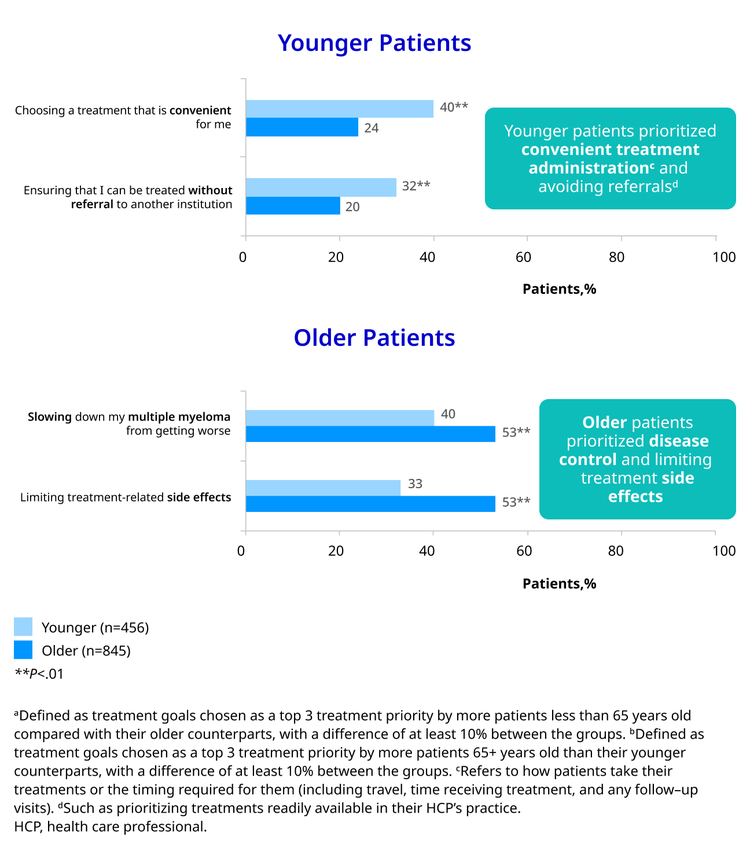
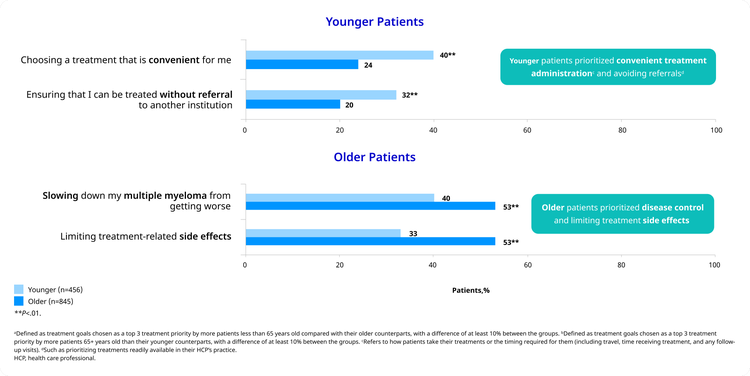
Top Treatment Priorities for Younger (Less Than 65 Years)a and Older (65+ Years) Patientsb
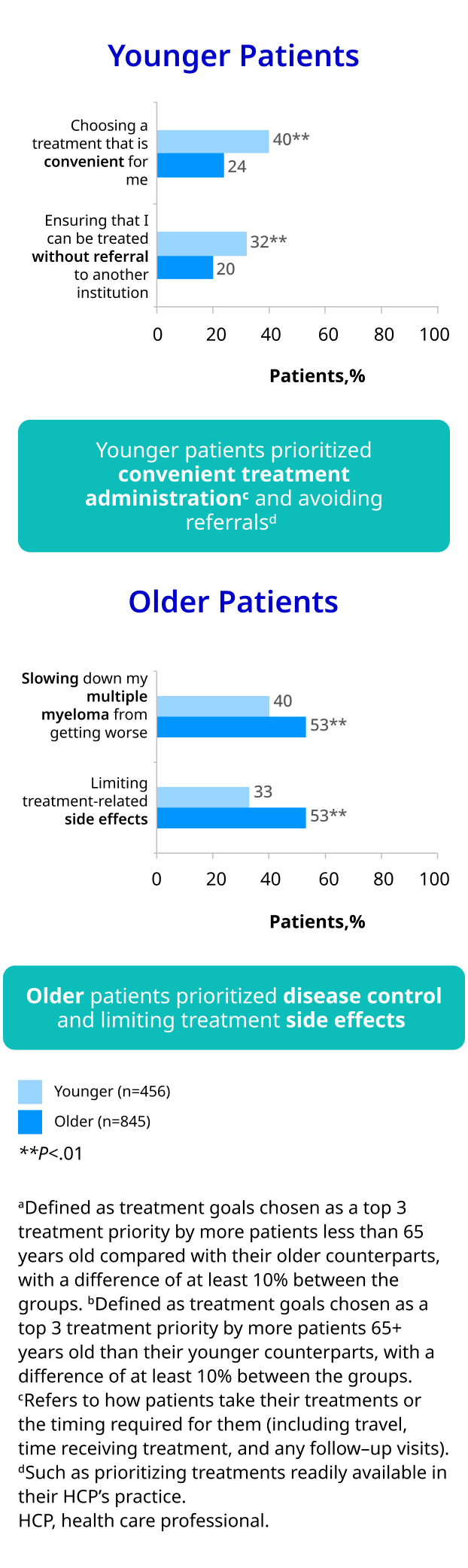
A figure containing two horizontal bar charts titled "Top Treatment Priorities for Younger (Less Than 65 Years) and Older (65+ Years) Patients". The charts compare treatment priorities between these two age groups. The legend indicates that light blue bars represent Younger patients (n=456) and dark blue bars represent Older patients (n=845). A double asterisk (**) indicates a p-value of less than .01. The x-axis for both charts represents the percentage of patients. Chart 1: Younger Patients This chart shows priorities more important to younger patients. Choosing a treatment that is convenient for me: Younger patients: 40%**, Older patients: 24%. Ensuring that I can be treated without referral to another institution: Younger patients: 32%**, Older patients: 20%. A callout box for this chart reads: "Younger patients prioritized convenient treatment administration and avoiding referrals". Chart 2: Older Patients This chart shows priorities more important to older patients. Slowing down my multiple myeloma from getting worse: Younger patients: 40%, Older patients: 53%**. Limiting treatment-related side effects: Younger patients: 33%, Older patients: 53%**. A callout box for this chart reads: "Older patients prioritized disease control and limiting treatment side effects". A figure containing two horizontal bar charts titled "Top Treatment Priorities for Younger (Less Than 65 Years) and Older (65+ Years) Patients". The charts compare treatment priorities between these two age groups. The legend indicates that light blue bars represent Younger patients (n=456) and dark blue bars represent Older patients (n=845). A double asterisk (**) indicates a p-value of less than .01. The x-axis for both charts represents the percentage of patients. Chart 1: Younger Patients This chart shows priorities more important to younger patients. Choosing a treatment that is convenient for me: Younger patients: 40%**, Older patients: 24%. Ensuring that I can be treated without referral to another institution: Younger patients: 32%**, Older patients: 20%. A callout box for this chart reads: "Younger patients prioritized convenient treatment administration and avoiding referrals". Chart 2: Older Patients This chart shows priorities more important to older patients. Slowing down my multiple myeloma from getting worse: Younger patients: 40%, Older patients: 53%**. Limiting treatment-related side effects: Younger patients: 33%, Older patients: 53%**. A callout box for this chart reads: "Older patients prioritized disease control and limiting treatment side effects". A figure containing two horizontal bar charts titled "Top Treatment Priorities for Younger (Less Than 65 Years) and Older (65+ Years) Patients". The charts compare treatment priorities between these two age groups. The legend indicates that light blue bars represent Younger patients (n=456) and dark blue bars represent Older patients (n=845). A double asterisk (**) indicates a p-value of less than .01. The x-axis for both charts represents the percentage of patients. Chart 1: Younger Patients This chart shows priorities more important to younger patients. Choosing a treatment that is convenient for me: Younger patients: 40%**, Older patients: 24%. Ensuring that I can be treated without referral to another institution: Younger patients: 32%**, Older patients: 20%. A callout box for this chart reads: "Younger patients prioritized convenient treatment administration and avoiding referrals". Chart 2: Older Patients This chart shows priorities more important to older patients. Slowing down my multiple myeloma from getting worse: Younger patients: 40%, Older patients: 53%**. Limiting treatment-related side effects: Younger patients: 33%, Older patients: 53%**. A callout box for this chart reads: "Older patients prioritized disease control and limiting treatment side effects".

Reference

  1. Ailawadhi S, Biru Y, Clavreul S, et al. Perspectives of healthcare providers and patients with relapsed/refractory multiple myeloma on treatment priorities and novel therapies. Patient Prefer Adherence. 2025;19:1089-1104. Published April 2, 2025. Taylor & Francis Ltd. Reprinted by permission of the publisher Informa UK Limited trading as Taylor & Francis Ltd, http://www.tandfonline.com