Approved immunotherapies may not be offered to all eligible patients1
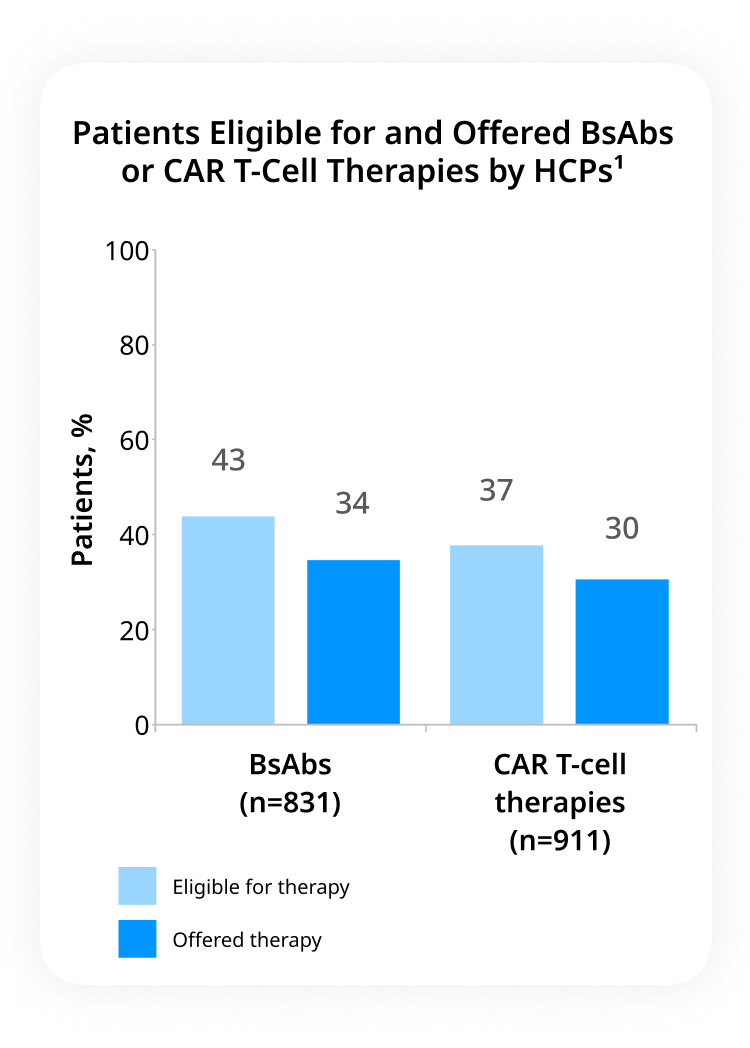
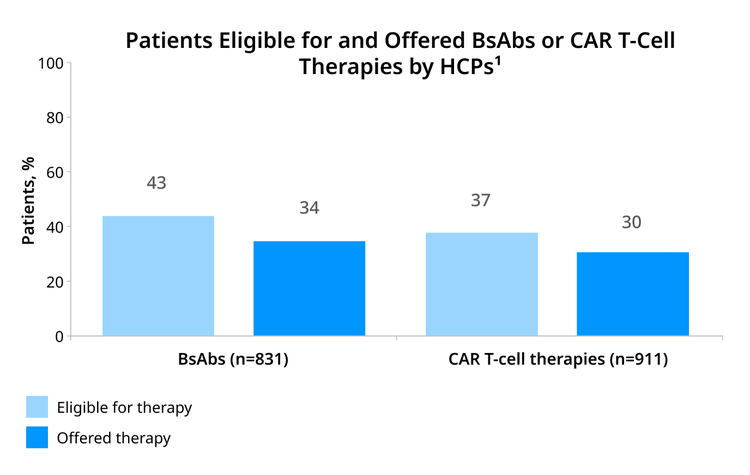
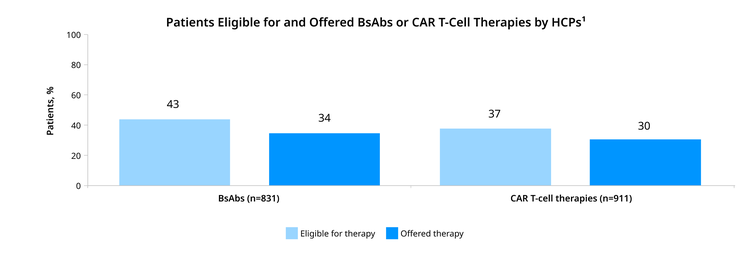
BsAb, bispecific antibody; CAR, chimeric antigen receptor; HCP, health care professional.
Awareness of approved immunotherapies was lower among patients of ethnicities/races other than White† in the US1,a
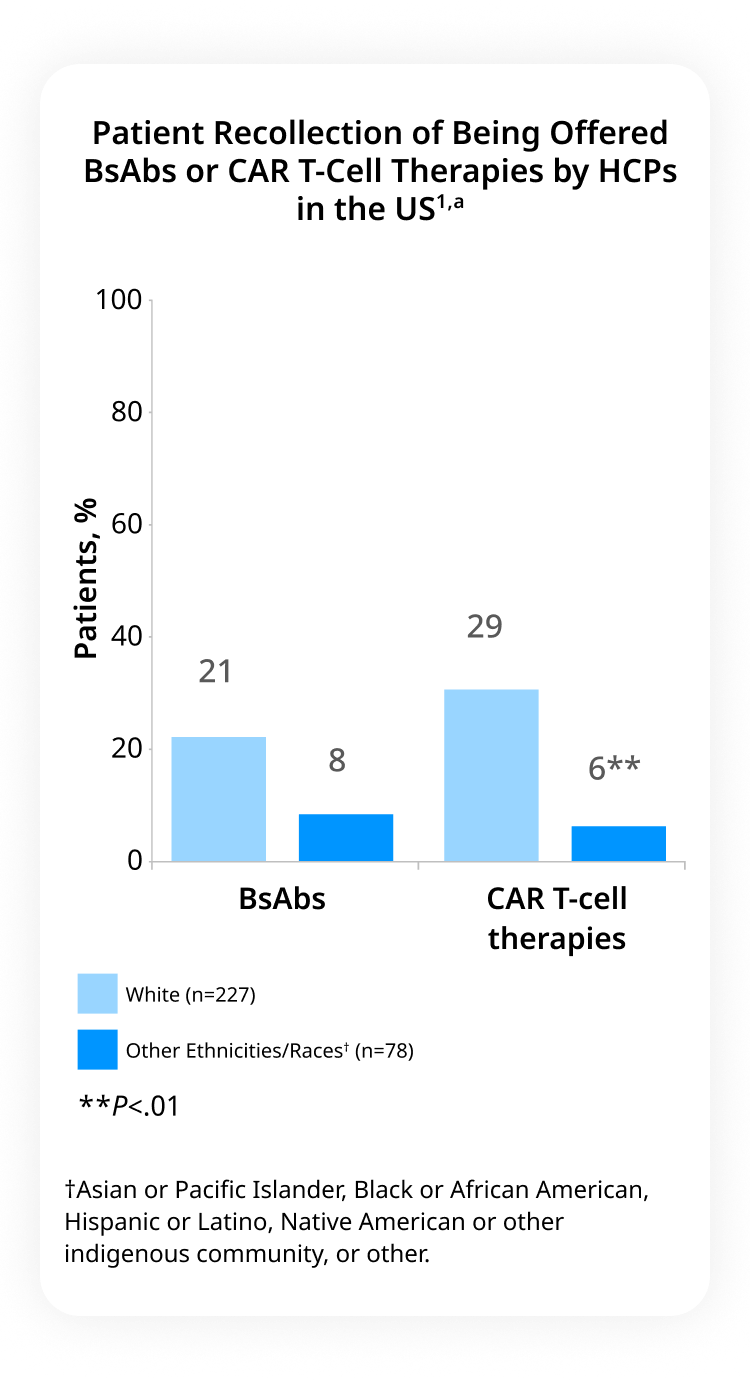
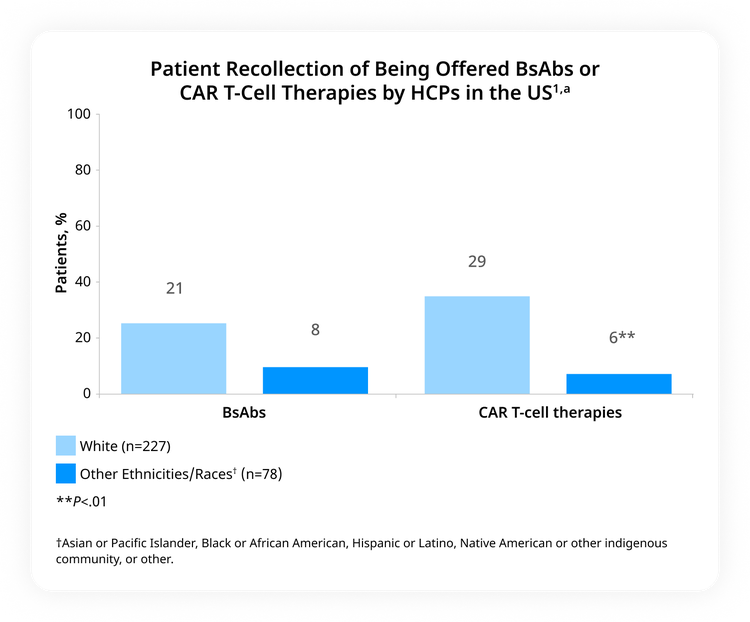
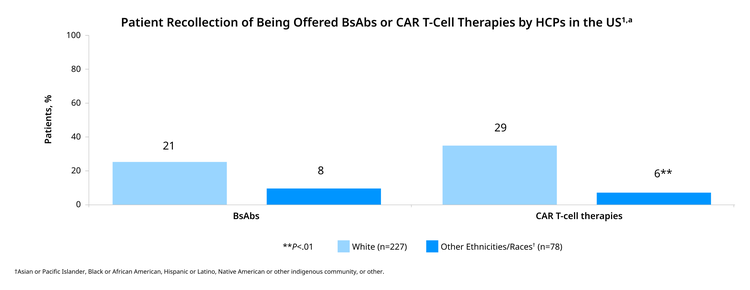
aThe only country for which racial data were available was the US. The data represent results from all patient respondents from the US regardless of eligibility for BsAbs or CAR T-cell therapies. Eligibility for BsAbs or CAR T-cell therapy was not determined in the survey.1
Patients Perceived to Be Eligible for BsAbs or CAR T-Cell Therapy by HCPs2
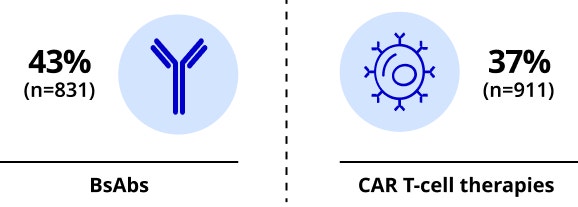
Among HCPs, perceived patient eligibility for BsAbs was greater than for CAR T-cell therapy2
View HCP perceptions of patients eligible for BsAbs or CAR T-cell therapy by:
Care Setting and Country
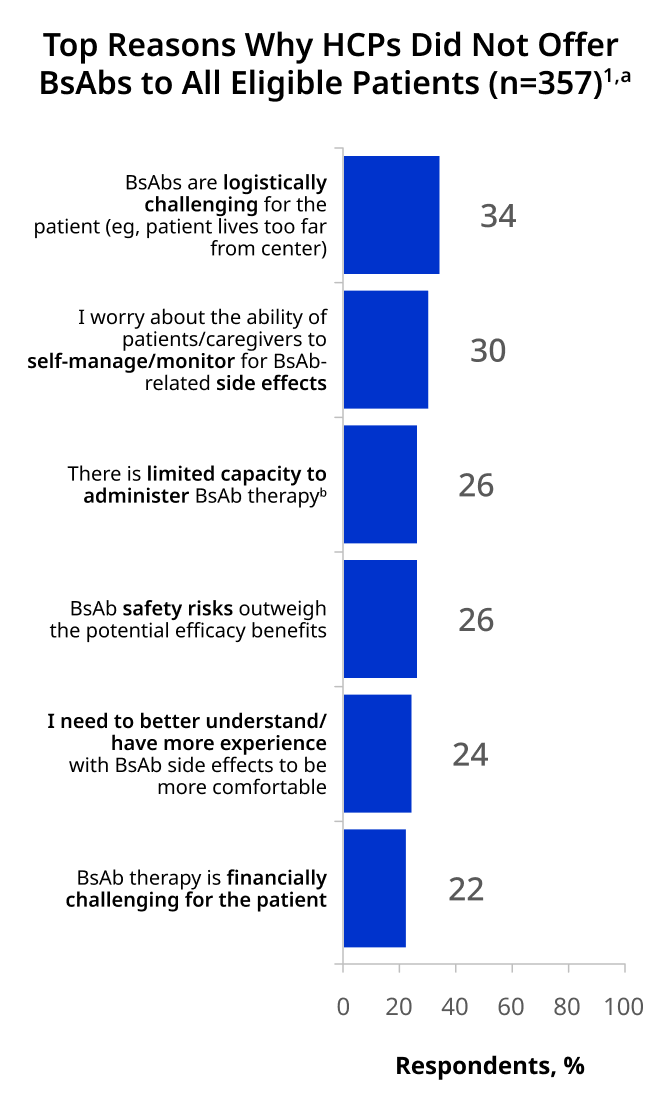
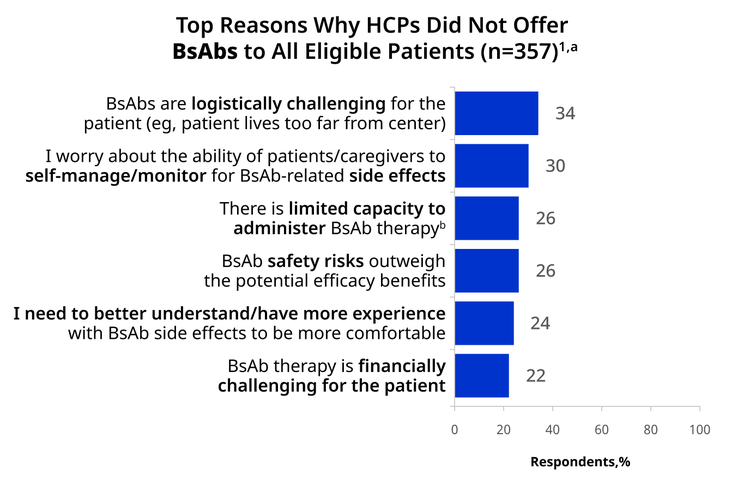
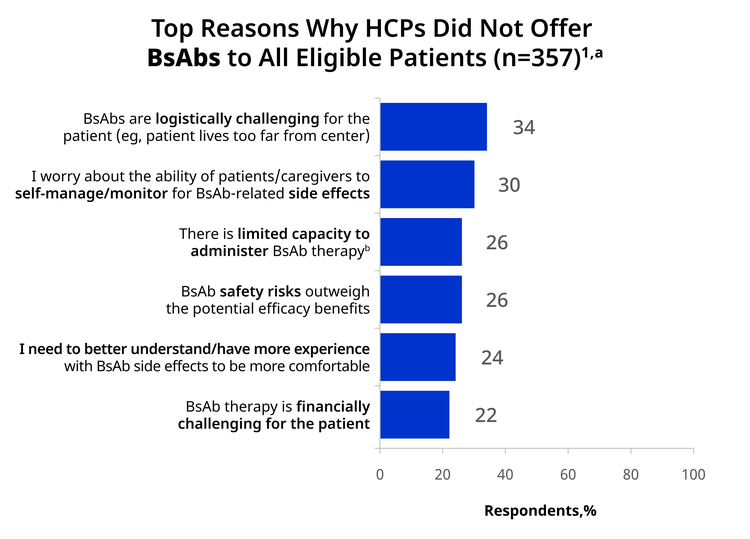
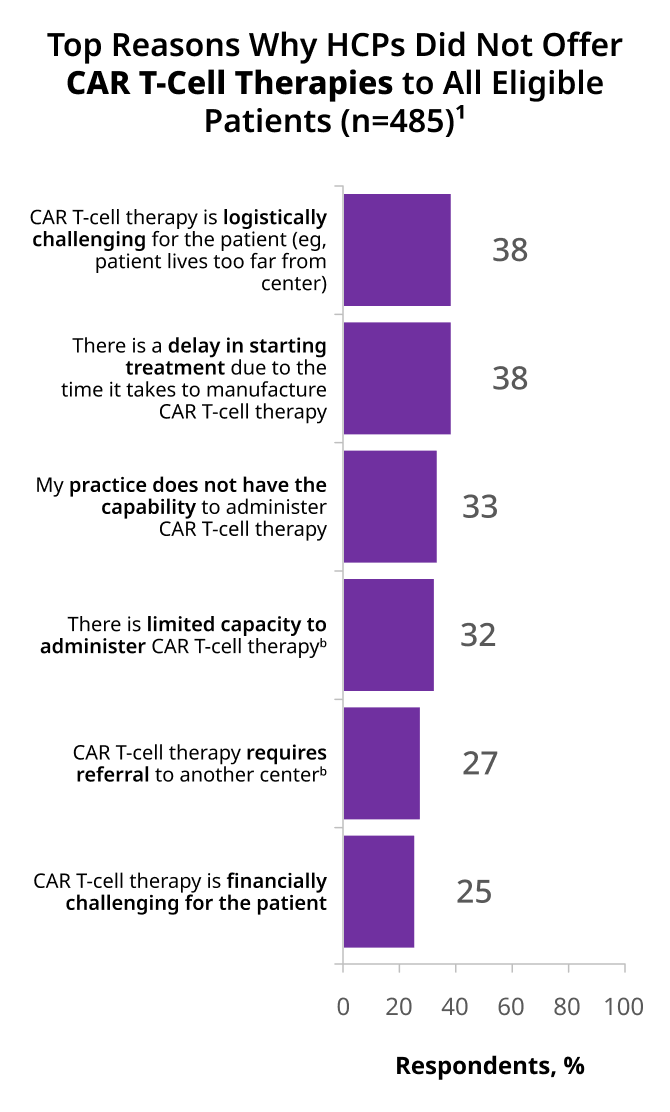
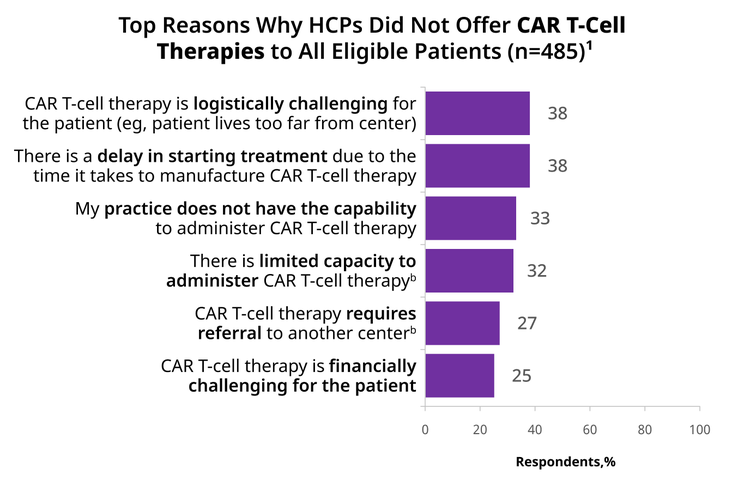
Perceived logistical challenges may prevent HCPs from offering immunotherapies to eligible patients1
- In addition to logistical challenges, limited administration capacity was another top reason for not offering both BsAbs and CAR T-cell therapies to patients1
- Other reasons HCPs did not offer BsAbs included1:
Patients’ ability to monitor side effects, safety risk perceptions, and need for more education and experience with BsAbs
- CAR T-cell therapy–specific concerns included1:
Treatment start delays, lack of in-practice administration capabilities, referral needs
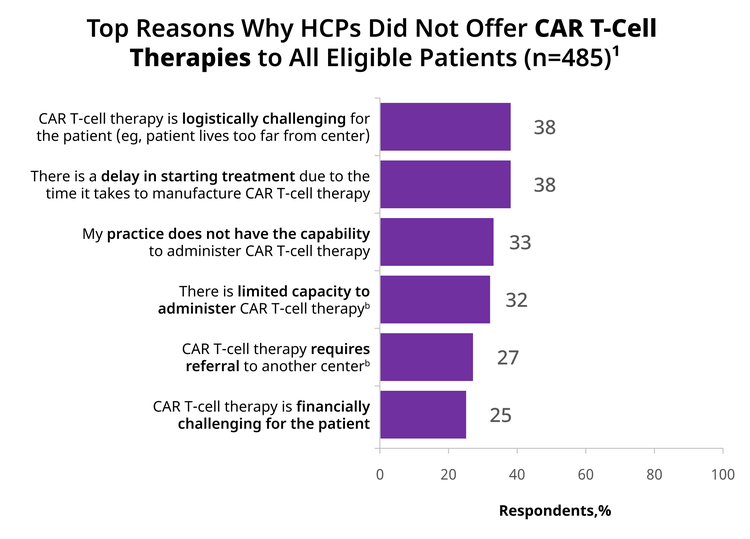
aSample consisted of HCPs from US and Europe but not Japan.1 bSimplified from survey language.
aSample consisted of HCPs from US and Europe but not Japan.1 bSimplified from survey language.
Increase HCP Familiarity With Approved Immunotherapies
Support physician-led programs providing peer-to-peer education and collection of real-world evidence around immunotherapies while promoting collaboration between oncologists at academic centers/COEs and those in community clinics/non-COEs
Who Can Take Action?
Clinical experts, HCPs, industry
Rationale
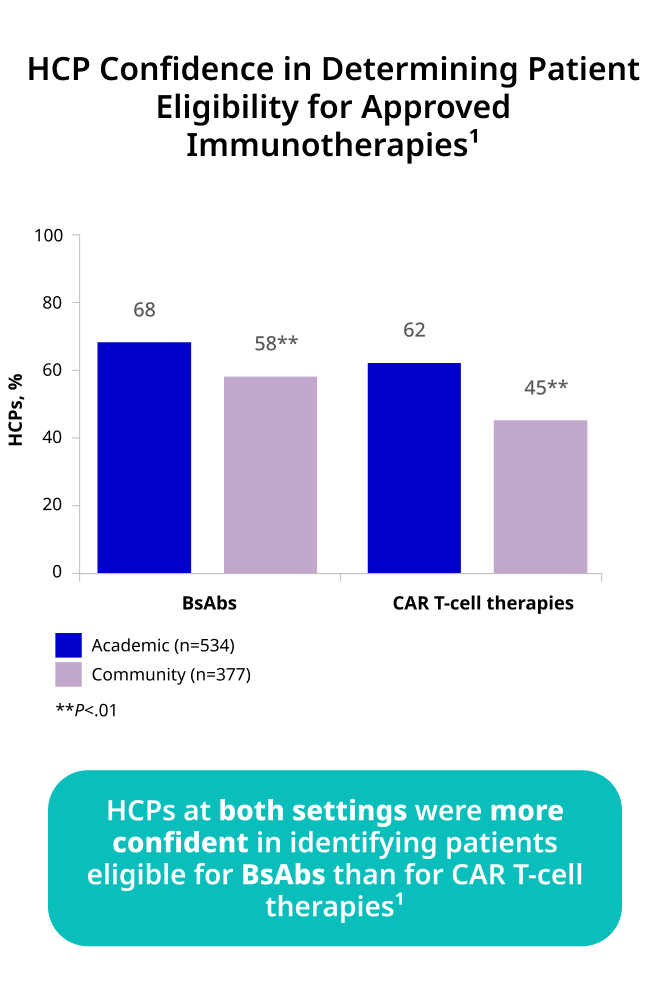
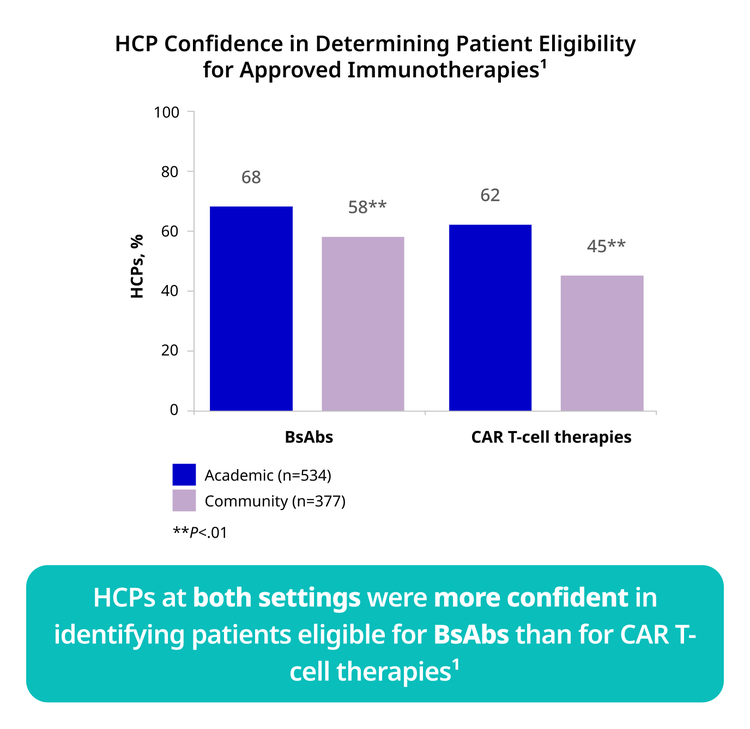
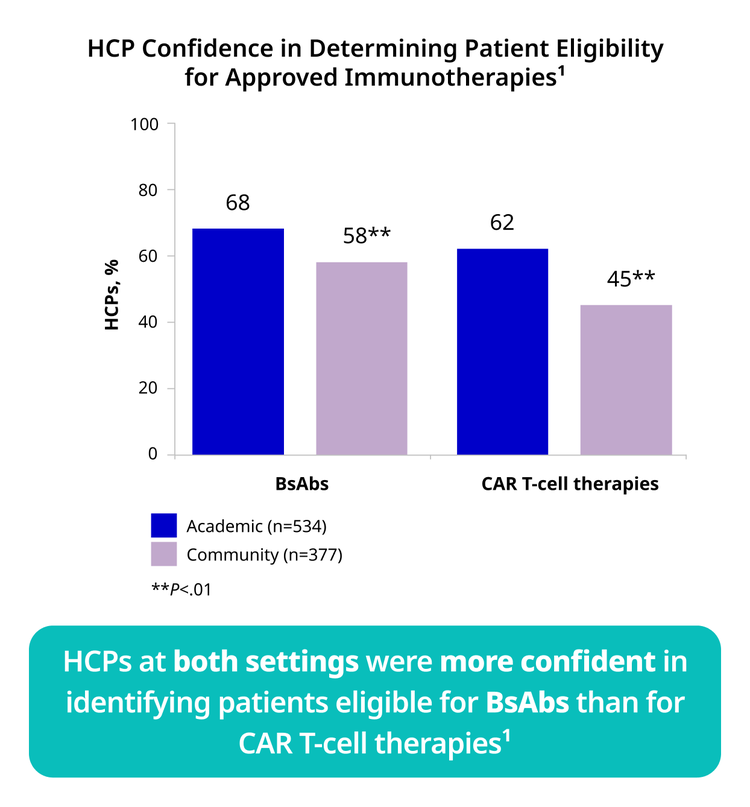
HCPs in community clinics reported feeling less confident in their ability to identify eligible patients for approved immunotherapies than their counterparts at academic/COE institutions, suggesting a knowledge gap between these groups.1 Without confidence in identifying eligible patients, HCPs may be hesitant to adopt these therapies into their routine clinical practice. Programs that connect clinical experts with community HCPs to share best practices may improve physician confidence in identifying eligible patients and using these therapies.3 Additionally, real-world data around patient outcomes, particularly in patients who might not have qualified for clinical trials, may bolster clinical evidence and address the safety concerns of HCPs regarding these therapies.3
Reduce Barriers to the Adoption of Approved Immunotherapies
Explore opportunities to help reduce the challenges associated with administration of approved immunotherapies
Who Can Take Action?
Clinical experts, industry
Rationale
Logistical challenges and hospitalization for side effect monitoring were among the top reasons that HCPs did not offer immunotherapies and patients declined them, respectively.1
To address these issues, real-world studies have begun to investigate the feasibility and safety of initiating these therapies in an outpatient setting,4,5 which may improve accessibility of these treatments for both patients and HCPs.3,6 Additionally, reducing the time patients spend in a hospital may help relieve capacity and resource limitations, addressing a concern of HCPs regarding these therapies.4
Explore reasons for differences in patient access to approved immunotherapies and potential solutions to address those gaps
Who Can Take Action?
Clinical experts, patient advocacy groups, policymakers
Rationale
Patients of ethnicities/races other than Whitea were less likely to recall being offered approved immunotherapies than their White counterparts.1 This echoes findings from other studies, which have found disparities in access to MM treatments and outcomes among patients of different races and socioeconomic status (SES).6,7 Patients of ethnicities/races other than Whitea were also less likely to be treated by MM specialists.1 Such outcomes support continued research into why racial and SES factors affect access to MM treatment, including approved immunotherapies.
aAsian or Pacific Islander, Black or African American, Hispanic or Latino, Native American or other indigenous community, or other.
References
- Ailawadhi S, Biru Y, Clavreul S, et al. Perspectives of healthcare providers and patients with relapsed/refractory multiple myeloma on treatment priorities and novel therapies. Patient Prefer Adherence. 2025;19:1089-1104. Published April 2, 2025. Taylor & Francis Ltd. Reprinted by permission of the publisher Informa UK Limited trading as Taylor & Francis Ltd, http://www.tandfonline.com.
- Zamagni E, Kevin B, Cormier N, et al. Differences across countries in healthcare provider confidence with CAR-T and bispecific antibody therapies for relapsed/refractory multiple myeloma. Presented at: EHA 2025 Congress; June 12-15, 2025; Milan, Italy. Poster PS1751.
- SITC and ACCC. Expanding access to cellular and bispecific therapies. Society for Immunotherapy of Cancer. Accessed October 10, 2025. https://higherlogicdownload.s3.amazonaws.com/SITCANCER/2c19e5a6-3adb-4d01-b46c-c01e11745b3a/UploadedImages/Policy/SITC_ACCC_Expanding_Access_Workshop_Report.pdf.
- Sandhal TB, Puttkammer J, Jensen CJ, et al. Outpatient management of bispecific related toxicities: an observational study of safety outcomes and resource utilization. Abstract presented at: American Society of Hematology (ASH) Annual Meeting; December 7-10, 2024; San Diego, CA.
- Gatwood K, Mahmoudjafari Z, Baer B, et al. Outpatient CAR T-cell therapy as standard of care: current perspectives and considerations. Clin Hematol Int. 2024;6(2):11-20.
- Banerjee R, Biru Y, Cole CE, Faiman B, Midha S, Ailawadhi S. Disparities in relapsed or refractory multiple myeloma: recommendations from an interprofessional consensus panel. Blood Cancer J. 2024;14(1):149.
- Lu R, Tariman JD, Catamero D, Hillengass M, Noonan K. Diversity, equity, and inclusion in multiple myeloma: a call to action. J Adv Pract Oncol. 2024:1-14.